
 March 05, 2025 - بواسطة مشرف
Silica dust (microsilica) features, properties and uses
Microsilica (silica fume) is a material with high reactivity that is used in relatively small amounts to increase the properties of concrete. This material is a byproduct of the special metals in electric arc furnaces. Today, microsilica is used in various industries, including refractories, plastics, clay, electronic materials, adhesives, silicone rubber, precision casting, etc.
What is silica fume?
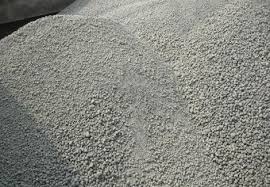
Silica fume is known as microsilica and is an amorphous (non-crystalline) polymorph compound of silicon dioxide, silica. Silica fume is an extremely fine powder collected as a byproduct of silicon and ferrosilicon alloys and consists of spherical particles with an average diameter of 150 nm.
Advantages of microsilica
- It reduces the permeability of concrete
- Significantly increases the durability of concrete
- Increases final strength
- Useful in a variety of high resistance concrete applications
- Improves bond strength to steel
- Significantly reduces the alkali-silica reaction
- Provides excellent resistance to sulfate or seawater attack
- Reduces steel corrosion
What are the different forms of microsilica?
Microsilica is produced and supplied in different forms. This product can be used in a non-dense, dense, Pelletized and slurry form.
Non-dense microsilica: The volume density of this material is about 200 kg/m3 to 300 kg/m3 and it is difficult to use it in the concrete industry.
Dense microsilica: This microsilica has a higher volume density (more than 500 kg/m3), which makes it easier to use and cheaper to transport compared to non-dense powder.
Pelletized microsilica: The pelletizing process involves turning microsilica into pellets with a diameter of about 0.7 to 1 mm and a bulk density greater than 600 kg/m3 on a pelletizing table.
Slurry microsilica: The slurry state of this microsilica has a specific density of 1400 kg/m3 and is produced by mixing non-dense microsilica with the same amount of water in terms of weight. Minor particles of silica fume are better distributed in the concrete mixture with a slurry state, and this condition leads to the preparation of a more homogeneous mixture.
Applications of microsilica
Bases on its application Microsilica can be divided into the following :
- Refractories: Silica fume is usually used in cast, porous and fused refractories. As an example, it can be used in high-performance, high-quality, low-cement refractory castings and prefabricated refractory parts, air-permeable bricks, large-scale iron trenches and ladles, etc.
- Mortar and concrete: silica fume may be used for port docks, tall buildings, railway bridges, reservoir dams, concrete pavements, etc.
- Protective Coatings: Nano Silica Sul is used as an active ingredient for protection against fire, environmental protection and anti-corrosion coating.
- Wall and decorative materials: silica fume can also be used for thermal insulation mortar, polymer mortar and as a bonding agent for wall insulation.
- Putty: microsilica can be used in putty powder to insulate external and internal walls.
- Filling and strengthening: It is also used as a filling and strengthening material in resin, rubber, paint, unsaturated polyester, etc.
- Additives: Finally, silica fume is usually used as an additive in other active areas.
How does microsilica affect hardened concrete?
Microsilica highly affects hardened concrete:
- Increasing the strength of concrete and mortar
- Increasing the elasticity coefficient of concrete
- Reduction of concrete creep
- Reduction of the permeability of concrete
- Increasing the durability of concrete
- And etc.
How to uses microsilica in concrete
Adding dry silica fume to the dry materials of concrete being mixed: This method has some problems like microsilica spreading in the air, inability to be mixed well and clumping of microsilica, etc. Naturally, using a strong mixer and agitator in making concrete can somehow fix this problems.
Adding microsilica to fresh concrete in a truck mixer or batching after mixing all the materials: in this method, like the previous method, there is a possibility that microsilica does not mix with concrete and spreads in the air.
Mixing silica fume with part of concrete water and adding it to concrete: Here, you prepare microsilica slurry and then add it to concrete. Since it has a uniform distribution in concrete, using microsilica slurry is very suitable. Additionally, since microsilica powder is toxic, its not being dispersed it in the air helps a person’s health in the long run.